The end of winter is a long-awaited time for many drivers. At last, you can switch to summer tires instead of noisy winter ones, forget about muddy roads, and head off on your favorite routes for vacations or weekend trips. But first, your winter-worn car needs an inspection and some care. RentDrive shares its fleet maintenance experience and offers a spring checklist. Follow it, and your car will be ready for any trip.
Cleaning
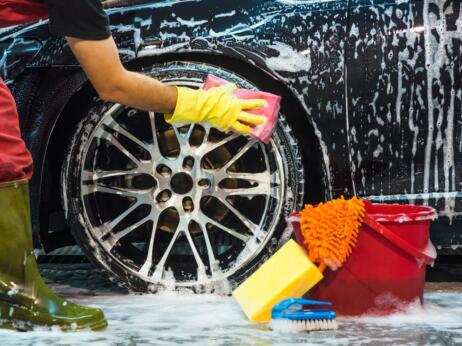
Winter roads are a constant headache for car owners. As soon as you see the equipment spreading de-icing agents on the street, Jack Sparrow’s cry comes to mind: “Stop blowing holes in my ship!” Indeed, there’s little pleasant about it: the sand-and-salt mix damages the paintwork, accelerates the natural corrosion of metal, and somehow also harms the tires and suspension components. Therefore, as soon as it gets warmer and the salt disappears from the roads, you need to remove any remaining de-icing agents from the bodywork.
After winter, it’s helpful to:
- Do a comprehensive car wash with underbody cleaning. You can order the service at a car wash or do it yourself with a pressure washer, paying special attention to the underbody and hard-to-reach areas.
- Clean the interior of dirt and dust, especially if you used rubber floor mats — they often trap moisture. It’s better to switch to textile mats for the warm season.
- Wipe all windows from the inside — in winter they accumulate condensation and residue that leaves streaks.
If corrosion spots formed over the winter, each new rainfall will intensify the effect of the de-icing agents, so rinse them off as early as possible. If you find corrosion or paint damage, don’t postpone minor repairs. Perform anti-corrosion treatment right away to prevent the rust from spreading further.

Tire replacement and maintenance
It’s already a tradition: once you “change shoes” in spring, the warm months have officially arrived. Every driver has their own tire-change routine. Some have both sets already mounted on wheels, so they just need to swap them; others visit a tire shop because their seasonal tires go on a single set of wheels. Either way, there’s a standard weather rule for changing tires: the average daily temperature should consistently be at least +7°C. Wherever you change your tires, you should:
- Inspect the removed wheels. If the tires show cracks, sidewall cuts, or worn tread, you’ll have six months to order new ones for next winter. If there are minor damages, such as punctures, you can have them vulcanized right away to avoid doing it in a rush in autumn when tire shops are overcrowded.
- Check the pressure. If you store wheels mounted on rims, keep in mind that summer heat will significantly increase pressure. It’s better to adjust it so storage remains safe.
- Inspect the running gear and suspension. If you service the car yourself, check the pads and brake discs, as well as other components that become visible after removing the wheel. If you find wear, you can schedule a service visit in advance and avoid a breakdown.
- Look for corrosion spots. Wheel arches tend to accumulate water and dirt, and in winter, de-icing agents. Rust often appears there due to damage to the paintwork.
Even if you’re used to full service at a workshop, it’s still useful to take a personal look at these areas.
Air conditioning service
There’s just one step from 10°C warmth to 30°C heat, and soon your A/C will be working non-stop. In summer, there’s no time to service it, and if it breaks, you’ll join those drivers who used to envy your closed windows in the blazing heat. What to do so you don’t worry about the A/C condition:
| What to check | How to check / What to do | Normal / Recommended | Possible actions if there’s a problem |
|---|---|---|---|
| Air cooling (A/C) | Warm up the cabin, turn on the A/C, and assess the temperature change, any odors, and airflow strength. | The air should be cool, odorless, with a noticeable airflow. | Clean the air delivery system or recharge the A/C. |
| Cabin filter | Check the filter’s condition. | Replace at least once a year or every 10–20,000 km. | If you drive on dusty roads, replace more often to avoid clogging. |
Going forward, stay attentive in daily use. If, while the A/C is running, you notice an odor (e.g., dust) or the air starts feeling warmer, it’s better to service it without waiting for a complete failure.
Fluid replacement or top-up
You need to monitor fluid levels and replace them regularly. The simplest way is to service all of them at once. That way, you won’t miss anything and will know exactly the condition of each system. Check the following:
- Engine oil. The average interval is 10–15 thousand kilometers, but check your owner’s manual for the exact figure, as it depends on the engine type and configuration. Remember that the engine works under higher load in winter, so at the end of the season make sure the oil hasn’t lost its properties prematurely.
- Coolant. In winter, cold air and the heater help with cooling; in summer, the system has to work at full capacity. The average service life of antifreeze is 2–3 years, but it’s best to personally verify its quality and replace if needed.
- Brake fluid. Aside from severe frosts, winter always brings high humidity, and combined with temperature swings, this affects the fluid’s properties. Like antifreeze, it’s changed about every 2–3 years; discoloration is a sign you should replace it sooner.
- Washer fluid. Splashes from the wheels will soon be replaced by swarms of annoying insects, so swap your winter mix for a summer “anti-bug” formula.
Don’t forget to note the date and mileage when you changed the fluids. This makes future maintenance easier and helps you avoid missing the next service.
Suspension diagnostics
You can inspect the braking system during the tire change, but the suspension is a bit trickier — in a static position and without special tools, you won’t see much.
If you’re used to maintaining the car yourself, inspect:
- Shock absorbers and struts
- Silent blocks
- Dust boots
- Tie rods
- Ball joints
- Control arms
- Stabilizers
Also pay attention to how the car behaves: if, after the tire change, you notice vibration or steering wheel wobble while driving, you need to balance the wheels. Don’t forget about wheel alignment. It should be done every 20,000 kilometers, and unscheduled — after major suspension repairs or hitting a large pothole.
Instrument and electrical checks
If you’ve decided to service your car after winter, it’s best to check as many systems as possible so you’re not dealing with them at the height of summer. Dirt and de-icing agents get everywhere and can cause unpredictable consequences. During seasonal maintenance, it’s useful to:
- Check the operation of all lights — exterior and interior — and replace bulbs if needed.
- Thoroughly clean the headlights. If they’ve become cloudy from sand and salt, polish them to restore both appearance and light output.
- Inspect the wiper blades. After winter they often leave gaps or streaks. Sunlight will accelerate material degradation, so it makes sense to replace them now.
After completing this checklist, your car will be fully ready for the warm season and those long-awaited trips. And if you don’t want to spend time on preparation, visit RentDrive and choose any rental car from our fleet. All models are fully serviced, prepared for the current season, and waiting for you behind the wheel!