Choosing tires is not a technical formality but a management decision with a direct impact on safety, cost predictability, and the driver’s legal responsibility. For private car owners, a mistake means financial losses. For renters, it also means lost time, fines, and disputes with insurance companies.
Why does the type of tires matter specifically in Ukraine?
Ukraine’s climate is unstable: mild winters with sudden cold snaps, spring frosts, and summer heat above +30 °C. Under such conditions, there are no universal solutions. Tires operate within a narrow temperature range; exceeding it reduces grip, increases braking distance, and accelerates wear.
What types of car tires are there?
The market is divided into four basic categories:
- summer
- non-studded winter
- studded winter
- all-season
Each of them is optimized for specific conditions rather than “all situations.”
How do summer tires differ from the others?
| Criterion | Summer tires |
|---|---|
| Operating temperature | From +7 °C and above |
| Performance on dry asphalt | Stable and predictable |
| Performance on wet roads | Efficient water drainage |
| Braking distance in summer | Minimal |
| Fuel consumption | Below average |
| Behavior at +5 °C and below | Sharp loss of grip |
| Use on cold asphalt | Not recommended |
In car rental, summer tires are used from April to October, strictly based on weather conditions rather than the calendar.
When are non-studded winter tires justified?
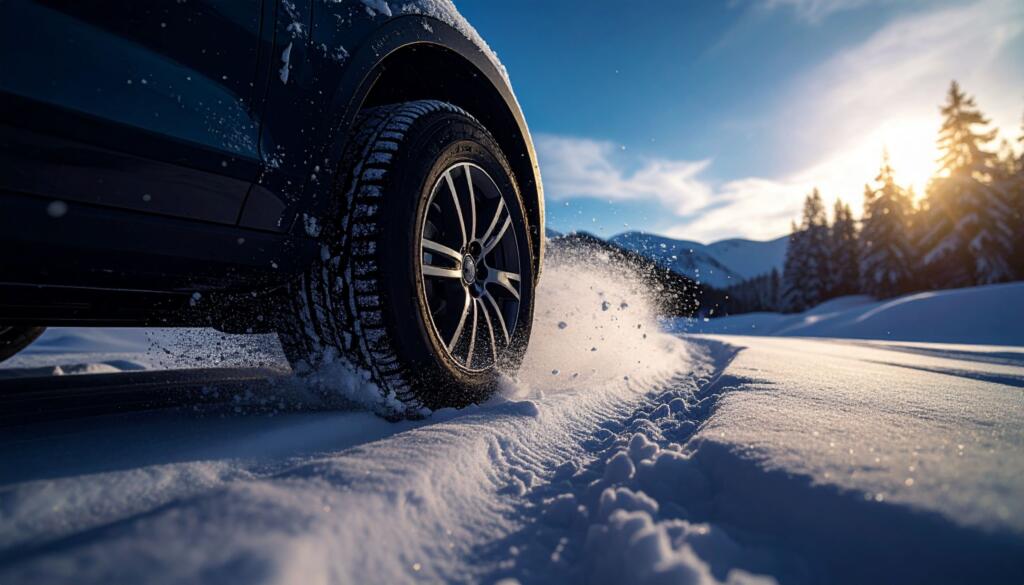
This is the main standard for Ukrainian cities, including Kyiv. They operate at temperatures below +7 °C, providing grip through softer rubber compounds and sipes.
Pros:
- safe on wet, cold, and snowy asphalt
- quieter than studded tires
- suitable for urban driving
Cons:
- weaker grip on ice compared to studded tires
- faster wear at positive temperatures
Are studded tires necessary in Ukraine?
Studded tires are effective exclusively on ice and compacted snow. In Kyiv’s urban conditions, they are used rarely.
| Criterion | Studded winter tires |
|---|---|
| Grip on ice | Maximum |
| Noise level | Increased |
| Braking distance on asphalt | Longer |
| Impact on road surface | Accelerated asphalt wear |
For rental vehicles, studded tires are economically and operationally impractical, except in certain regions or on rural routes during heavy snowfall.
Can all-season tires be trusted?
Pros:
- no need for seasonal tire changes
- convenient for infrequent vehicle use
Cons:
- inferior to summer tires in summer
- inferior to winter tires in winter
- increased wear
Comparison of tire types
| Tire type | Temperature range | City | Highway | Ice |
|---|---|---|---|---|
| Summer | +7 °C and above | Yes | Yes | No |
| Non-studded winter | Below +7 °C | Yes | Yes | Moderate |
| Studded winter | Below 0 °C | Limited | Limited | Yes |
| All-season | −5 °C … +25 °C | Conditional | Conditional | No |
How does the type of tires affect operating costs?
Incorrect tires increase:
- braking distance by 20–40%
- the likelihood of accidents
- tire and suspension wear
For a rental company, this means direct losses. That is why reliable operators, including RentDrive, strictly change tires by season and do not use “tick-the-box” universal solutions.
What does this mean for the car rental customer?
Car rental removes key risks from the driver:
- no need to store a second set of tires
- no need to monitor seasonal replacement
- the vehicle already matches current weather conditions
Why is it important to choose a professional rental company?
Tires are one of the indicators of rental quality. Companies with opaque economics save precisely on tires, installing worn or out-of-season sets.
At RentDrive, a simple model is used:
- seasonal tires based on actual weather
- uniform standards across all vehicle classes
- predictable vehicle behavior in emergency situations
The type of tires directly affects safety, comfort, and the legal consequences of a trip. Under Ukrainian conditions, universal solutions do not exist. That is why renting a car with properly selected tires is a rational alternative to temporary car ownership.
When the vehicle is already prepared for the season, the driver can focus on the route and tasks rather than technical compromises.