Ukraine is approaching the point where digital technologies will become not just an enhancement but the foundation of transport control. By 2026, all commercial carriers must transition to using “smart” tachographs and integrated monitoring systems. This requirement is driven not only by international standards but also by the need to improve transparency, safety, and overall efficiency in the industry.
What are “smart” tachographs, and why are they needed?
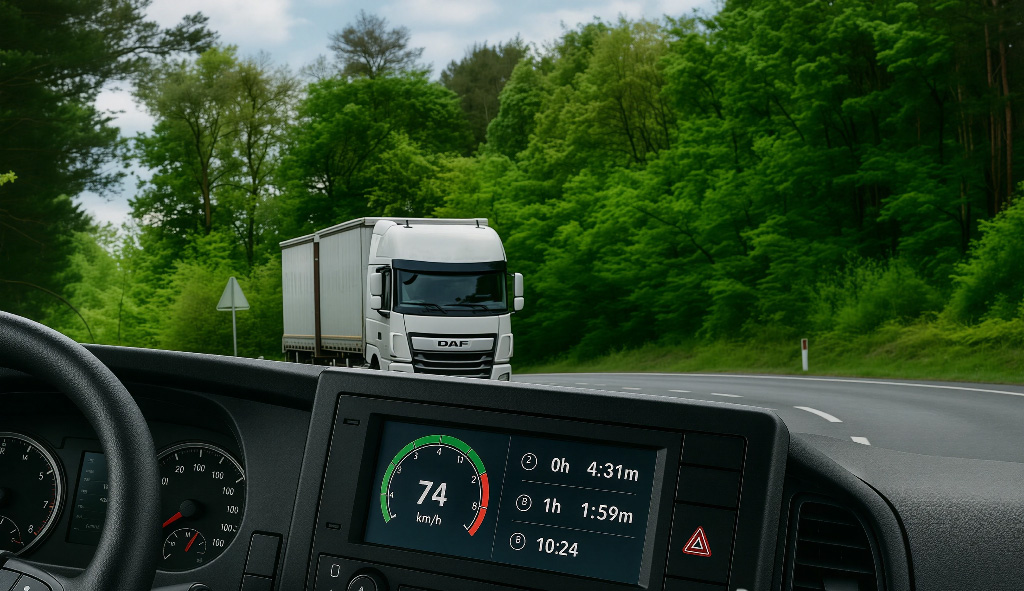
A second-generation “smart” tachograph is a device that records and transmits data on a driver’s working hours, route, speed, rest periods, and border crossings. Unlike analog or earlier digital devices, these tachographs are connected to GPS and GSM systems, allowing inspectors and companies to receive data remotely.
Why is Ukraine switching to the new system?
The main goal is to reduce accident rates and protect drivers’ rights. According to the Ministry of Infrastructure, EU countries saw a 60% reduction in violations of working-time rules after introducing the new generation of tachographs. In Ukraine, the system will enable control not only of time behind the wheel but also of transportation quality.
Additionally, “smart” devices help combat illegal or unregistered trips and falsified records. Automated data exchange eliminates opportunities for manipulation and forgery.
What will change for carriers?
With the introduction of new regulations, every transport company will be required to equip its fleet with second-generation tachographs. This means purchasing equipment, training staff, and integrating collected data into the national monitoring system.
| Indicator | Legacy systems | Smart tachographs 2.0 |
|---|---|---|
| Data transmission | Driver card | Online via GPS/GSM |
| Inspector control | Only during roadside checks | Remote, in real time |
| Data falsification | Possible | Almost impossible |
| EU compatibility | Limited | Full integration |
The cost of one tachograph ranges from €600 to €900, and installation requires a certified service center. However, in the long term, this is an investment in safety and lower penalty risks.
Is the Ukrainian market ready for the transition?
According to the Ukrainian Logistics Alliance, only about 30% of fleets have begun modernization. The rest are waiting, evaluating economic feasibility. Key barriers include a lack of certified service centers and the high cost of devices.
| Market readiness indicator (2025) | Share of companies |
|---|---|
| Fully switched to smart tachographs | 12% |
| In transition | 18% |
| No implementation started | 70% |
How will digitalization affect the car-rental market?
Digital control applies not only to freight transport. Large companies and corporate clients who rent vehicles also fall within the regulators’ focus.
RentDrive car rental is already partially implementing a digital-transparency approach:
- Telematics devices record routes, speed, and driving style.
- Clients receive detailed reports on each trip.
- Corporate users can monitor vehicle use online.
RentDrive car rental in Kyiv demonstrates that the principles of tachograph-based control can be effectively applied to passenger cars as well, improving customer trust and discipline.
Benefits and challenges of the new system
Key benefits:
- Increased road safety.
- Reduced administrative burden on carriers.
- Transparent reporting and protection against corruption risks.
- Ability to plan logistics based on accurate data.
Remaining challenges:
- Need for investment in equipment.
- Updating the regulatory framework.
- Training personnel — drivers, mechanics, logistics staff.

Economic impact on the industry
Automation of control processes helps reduce operating costs. Companies that have implemented digital tachographs note a 10–15% increase in fleet productivity.
| Indicator | Before implementation | After implementation |
|---|---|---|
| Average vehicle downtime | 14% | 8% |
| Violations of working-time rules | High | Reduced by 60% |
| Administrative costs | 100% | 85% |
| Reputational risks | Frequent fines | Minimal |
RentDrive’s role in shaping the digital transport market
The company RentDrive views transport digitalization as a natural step in the development of car rental services.
Modern telematics systems allow clients to track their trips, receive reports, and ensure contractual compliance.
Outlook toward 2026
By 2026, Ukraine is expected to finalize integration with the European transport-control system. This will create a unified digital environment where trip data, rest periods, and vehicle condition will be available in real time.
For businesses, this means one thing: digital transparency will become not a competitive advantage but a mandatory standard. Companies that begin adopting “smart” systems now will be able to adapt faster and operate with lower costs.