A personal car is a comfortable way to travel: no dependence on the traffic schedule, no crowds, and increased mobility and efficiency. Even those who do not have their own transportation rent a car in Kyiv to move around the capital and Ukraine without restrictions. However, fuel prices are constantly rising, which forces drivers to optimize their costs.
What can you save on?
We all value this notorious comfort and do not want to exchange the freedom of a car for public transport. To prevent the rise in fuel prices from “hitting” your wallet, it is important to look for ways to save money. You may be surprised, but you do not need to give up your usual trips in your personal or rented car. You just need to analyze where your money is spent in order to find ways to save.
To begin with, it is worth noting that car maintenance is not an expense item that needs to be cut in order to save money. The risk of serious breakdowns and the dangers associated with them is in itself a good reason to service your vehicle on time, but there is another criterion that is often ignored. The efficiency of worn parts and consumables drops noticeably, which leads to an increase in costs for each kilometer traveled. Do not wait until something starts rattling in the car: carry out maintenance in accordance with the manufacturer’s recommendations, and the absence of unexpected expenses will already become a serious way to save.
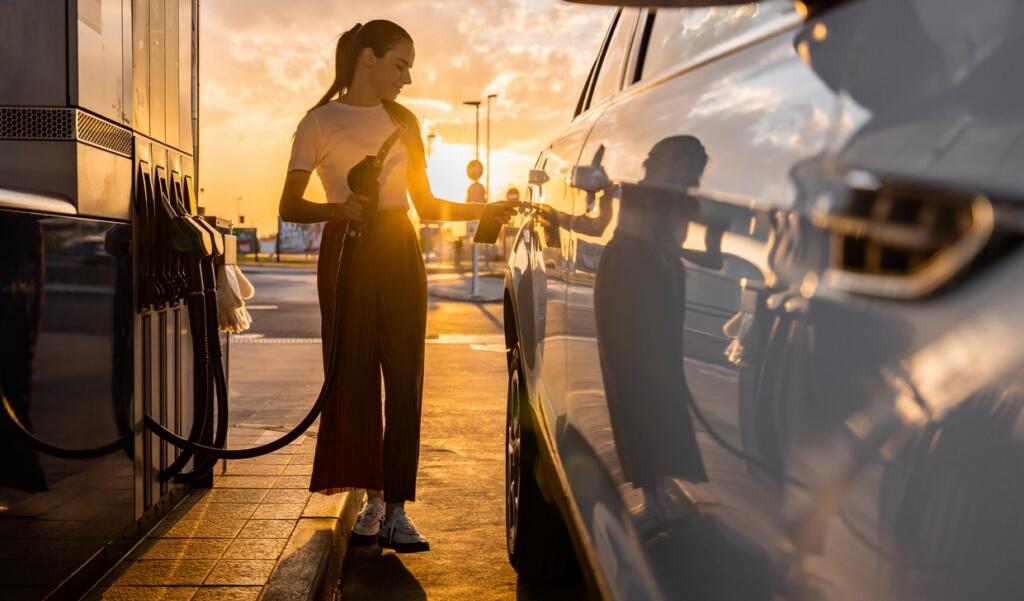
So, we are not going to reduce the number of trips, and we cannot save on maintenance and replacement of consumables. How can we reduce costs? The main criterion we can influence is fuel consumption. Of course, the manufacturer indicates the approximate consumption in the technical specifications of the car, but this value is often far from reality. Tests are conducted on a flat road, at an ideal speed of 90 km/h, and such conditions occur extremely rarely in real-world settings. A lot depends on the driver, and consumption can be optimized without any harm to the car.
How to reduce fuel consumption? Top useful tips
Fuel consumption is not a fixed value: for two different drivers behind the wheel of the same car model, this indicator can differ by almost half. How can you understand that there are problems? Compare your actual consumption with the standard recorded in the technical documentation: if it exceeds the norm by 3-5 liters, this is already a reason to think and find the cause. This way, you can save 180-200 UAH for every 100 km of mileage (when refueling with high-quality 95 octane gasoline). We tell you which parameters affect your consumption and what can be done to improve them.
Make car service
First of all, pay attention to the following indicators:
- Ignition system – up to 9% of consumption. Ignition misfires manifest in power drops, unstable idle, and jerks during acceleration. Of course, misfires will not ruin the engine, but they seriously affect consumption. First, you need to check the spark plugs, and then visit a service station, where they will diagnose the injectors, distributor, and other components.
- Oil quality – up to 15% of consumption. If the engine oil does not meet the required specifications, it will resist engine operation, which will lead to increased consumption. You should use only the grade and viscosity specified in the manufacturer’s instructions. Also, do not forget to change the oil on time, at least as often as specified in the maintenance schedule.
- Cooling system – up to 5% of consumption. The coolant must warm up to 80-100 degrees, depending on the engine type, so that it can operate in optimal mode. If the temperature does not reach the desired level or warming up takes too long, check the thermostat. Perhaps it is not working properly and constantly “drives” antifreeze in a large circle.
- Clutch – up to 5% of consumption. A worn clutch can be identified by the tachometer. While driving, sharply add gas: if the revs increase but there is no traction, you need to replace the clutch. This unit must fully transmit torque; otherwise, a significant portion of the fuel will be burned in vain.
If you regularly carry out diagnostics at the service station, you can avoid the listed problems. If you rent a car, choose RentDrive company — we guarantee regular maintenance of the entire fleet and the cheapest car rental in Kyiv.
Check the aerodynamics
Bad aerodynamics can increase fuel consumption by up to 10%. How can you improve it? If you have a roof rack, remove it when it’s not needed. You also need to make sure that the bumpers and other structural components do not have gaps that are too large for the design.
Some fans of high speeds install spoilers and other aerodynamic elements on their cars to increase downforce. If you do not have the contacts of a licensed tuning studio, it is better to avoid the “collective farm,” since incorrectly selected elements only worsen aerodynamics and increase fuel consumption.
An important question of the summer season: air conditioning or open windows? If you decide to sacrifice convenience, you are unlikely to save much. Do not forget that fully open windows significantly spoil the aerodynamic characteristics. Perhaps you will save a little, but this is clearly not the kind of savings for which it is worth sacrificing your comfort and health.
Keep an eye on your tires
Winter tires are irreplaceable; they increase traction on slippery and snowy roads, but at the same time, they increase resistance. You shouldn’t drive on winter tires all year round; put on summer tires as soon as the minimum air temperature rises above 5–7 degrees.
It is equally important to monitor the tire pressure: under-inflated tires lead to an increase in consumption by about 3%. As a rule, the technical specifications indicate the range of permissible pressure. Inflate to the upper limit for city or highway driving, and deflate to the lower limit when driving on a dirt road or off-road.
Get rid of overload
If you are the kind of car owner who carries half a trunk of spare parts “just in case”, then you are hardly saving. Every 100 kg of additional weight adds approximately +10% to consumption. Analyze the contents of your trunk and remove unnecessary cargo so that fuel consumption decreases.

Use electrical appliances rationally
When a large number of electrical appliances are turned on in a car, the load on the generator increases, which raises fuel consumption by up to 10% or even more. There are several ways to reduce electricity consumption:
- Turn off the heated glass and mirrors if the moisture has already been removed from them.
- Turn off the heated seats if they have already warmed up (by the way, this is also healthier).
- Do not set the air conditioner and climate control too high or low: learn to “catch” the balance between comfort and economy.
- Avoid using decorative LED lighting or other electrical equipment not provided for by the car’s design (if it is unnecessary).
Let’s highlight the use of low beams (or daytime running lights) separately. According to traffic regulations, they must be turned on:
- between sunset and sunrise;
- in conditions of limited visibility (less than 300 m in the direction of travel);
- outside populated areas.
In other cases, using headlights is not mandatory. If you can see the road well and drivers can see you, do not turn on the headlights “just like that,” as it will reduce fuel consumption.
Switch to a calm driving style
The main rule of economical driving is smooth acceleration and smooth braking. Let them overtake you at traffic lights; they will have to fill up with more gas later!
Here are a few more life hacks for fuel-efficient driving:
Follow the flow of traffic. If you rush, you will save a couple of minutes at most, but significantly increase consumption.
- Don’t speed up if you are not sure that you will make it in time for the green light. Try to look at the timer in advance: even if you are far away, you can still see when it shows 10+ or 20+ seconds.
- Stick to the recommended speed. If there is a 5.33 sign on the road (a speed indicator on a square blue field), try to drive at exactly this speed. As practice shows, this way you will be able to get to the “green street” and not stop at several subsequent traffic lights at once.
- Accelerate in advance before going uphill, if the traffic situation allows. This will make it easier for the engine to maintain revs on the slope.
- For drivers with a manual transmission: do not idle. The lowest fuel consumption will occur if you engage a gear and barely touch the gas pedal. By the way, for the same reason, it is worth using engine braking more often.
It may seem difficult at first, but economical driving comes with experience. You will begin to anticipate traffic and be able to vary your distance for dynamic driving without increasing your fuel consumption.
Summary
Unfortunately, we cannot influence the price of fuel, but every driver can take steps to reduce consumption. The advice provided will be useful both when driving your own car and when use car rentals in Kyiv.