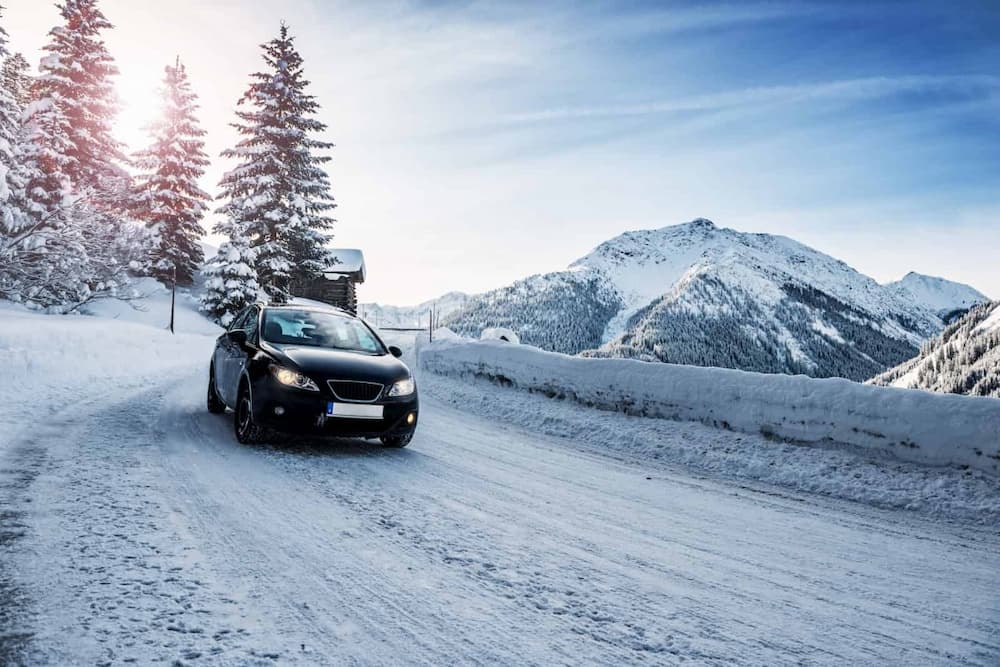
As cold weather approaches, personal transportation becomes particularly valuable. You can wear comfortable clothing and go anywhere without worrying about freezing or getting your feet wet. The car endures the harsh conditions, so it’s crucial to prepare it for the winter months.
Why need to prepare a car?
In our latitudes, distinct seasons affect not only nature but also technology. In summer, cars face high temperatures and drought, while in winter, the mechanisms must operate in conditions of constant humidity, low temperatures, and even extreme weather. Such changes directly impact the functionality of the main components. By preparing your car for winter, you can significantly extend its service life and ensure that winter passes without unexpected breakdowns.

Another reason to take some time to prepare for winter is safety. Freezing fluids, loss of control, and other issues can be much more serious than they initially appear. Fall maintenance will safeguard you against such problems, allowing you to feel confident in your own safety wherever you go.
Preparing Your Car for Winter
We recommend paying attention to all the steps listed below. Follow them, and you will be fully prepared for winter, regardless of how cold or rainy it gets.
Change and check your tires
If you are subscribed to local or automotive Telegram channels, you have probably noticed how the number of accidents rises on the first snowy day. The most common cause is summer tires, which are completely unsuitable for winter use; this is why Ukraine has long been debating the introduction of fines for winter driving on summer tires. Unlike summer, winter tires:
- Do not harden in cold weather and remain flexible.
- Provide good traction on the road surface due to studs or a special tread pattern.
You likely understand the importance of winter tires, but when should you change them? Follow the weather forecast and install winter tires as soon as the average daily air temperature drops below 45 degrees Fahrenheit.
In addition to changing tires, remember to monitor their condition. Pay attention to the following criteria:
- Integrity. Side cuts or bumps are hazardous even after repair, so we recommend replacing such rubber with a new piece.
- Tread depth. In the grooves of the tread, you will find special partitions. These are wear indicators: if your tread has worn down to their level, those wheels are only fit for a flower bed at the cottage.
- For studded tires – the quantity of studs. These components have the unfortunate tendency to fall out. If about 40% of the studs are missing from a wheel, its performance is significantly impaired. In this situation, you need to have the wheel restudded or order new tires.
Check the battery
The service life of a battery is limited, and it often starts to malfunction in winter. In cold weather, battery capacity is significantly reduced, and combined with the higher viscosity of oil, this leads to difficult engine starting. If, after cold autumn nights, your starter turns the engine over slower than usual, change the battery without hesitation: it won’t have enough capacity to last through the winter. In other cases, you will need to check with a multimeter and an electrolyte density meter.
Even a new battery requires maintenance. During use, oxide or dirt may accumulate on its terminals, especially on the positive one. Remove the terminals, clean them with a brush, and reinstall them to ensure good contact. If you have a serviceable battery model, check the cells at least once a month and top up the electrolyte if necessary.
Change the oil
Depending on the type of fuel, the presence of a turbocharged engine, and the primary mode of operation of the car (city, highway, or mixed), the oil should be changed every 5,000 to 15,000 kilometers. The specific interval should be documented in your car’s service manual.
Even if the scheduled oil change period has not yet arrived (for example, if you are 500 to 1,000 kilometers away), it can still be wise to add new oil before cold weather sets in. The reason is that any oil thickens in the cold, and at temperatures of -25 degrees Celsius and below, it can completely lose its fluidity. Although such extreme cold is rare in our climate, it cannot be entirely ruled out. By changing the oil before winter, you can rest assured that it will not thicken excessively and will function properly.
Check Process Fluids
Before cold weather arrives, it’s essential to assess the condition of the car’s primary working fluids. We have already discussed oil, but the following fluids also require attention:
- Antifreeze
- Brake fluid
- Power steering fluid
They must be of high quality to avoid freezing during frost. If you have significantly diluted the antifreeze with distilled water, it’s best to replace it entirely. Trust us, ice formation in the cooling system will cost you much more.
During the inspection, you need not only to top off the fluids to the required levels but also to ensure their quality. If their consistency or color has changed, you should replace them to maintain the functionality of all related components.
Check the heater and windshield wipers
A fogged-up window is much more dangerous than it may seem. To prevent losing visibility on the highway or in a traffic jam, ensure that the heater blows warm air and that nothing obstructs its flow. Also, check the functionality of the rear window heater and mirrors, if applicable.
If the heater blows cold air, first, check the condition of the regulator and the position of the shut-off valve, if there is one. However, in most instances, the issue is air entering the heater radiator. In this situation, it will need to get out. You can perform this task yourself, but if you are not confident in your abilities, it is advisable to contact a service station. In most car models, the heater radiator is positioned below the main one, allowing you to get out the air in several steps:
- Place the car on a slope or an overpass to raise the front.
- Warm up the engine until it reaches operating temperature.
- Open the filler cap on the main radiator, being cautious to avoid burns.
- Start the engine and carefully rev it up to 3,000 to 4,000 RPM, ensuring that antifreeze doesn’t spill out of the neck.
- Once the heater blows warm air, turn off the engine. If needed, add antifreeze and securely tighten the lid.
In addition to the heater, your visibility will depend on the condition of your windshield wipers.
Change the windshield washer fluid
If your washer fluid freezes in the tubes, they are unlikely to burst, but you won’t be able to wash away dirt and sand from cars in front of you. Therefore, change the fluid to winter mix ahead of time. To test the quality of the washer fluid, pour some into a small container and place it in the freezer: a high-quality fluid will not freeze.
Equip your car with some tools
In addition to standard tools like a warning triangle, tow rope, or flashlight, don’t forget to include the following in the trunk:
- A brush and scraper for removing snow from your car.
- A shovel for digging out of a snowdrift or getting out of a skid (there are convenient folding models available).
- A glass defroster spray that helps quickly remove frost, getting you on your way faster.
It’s also useful to have a door lock defroster at home or in the garage, as it can be very helpful during cold weather or freezing rain.
Other Recommendations
Besides the basic steps for preparing for winter, we suggest focusing on the following points:
- Purchase a spare low beam bulb. If the main bulb burns out, you can quickly replace it while on the road, helping you avoid fines or dangerous situations.
- Inspect the underbody if your car model is susceptible to corrosion. It’s best to treat the underbody in the fall so that road chemicals won’t be able to damage it.
- Examine the brake pads and discs. On a slippery road, brake quality is critically important, and it’s much easier to replace them before cold weather arrives.
- Avoid driving “on a light bulb.” Refuel regularly to prevent the formation and freezing of condensate in your tank.
- For diesel vehicles: switch to winter fuel in a timely manner. Autumn frosts can catch you off guard, so being prepared for such weather changes is essential.
Most of the recommendations listed won’t take much of your time. Trust us, it’s worth it: your car will always be ready for the trip, and you’ll be able to travel comfortably. If you visit Kyiv, you can easily arrange an cheap car rental with RentDrive; every model in our fleet is serviced in full compliance with the provided recommendations.