Over the past ten years, the automotive technology market has experienced a surge of interest in autonomous systems. Manufacturers — from Tesla to BMW — are investing billions of dollars in developing artificial intelligence capable of replacing the driver. However, there remains a significant gap between laboratory testing and the roads of Kyiv or Odesa.
The question is not if autonomous vehicles will appear, but when they will be able to operate safely and legally in real conditions in Ukraine.
What does the term “autonomous vehicle” really mean?
An “autonomous vehicle” refers to a car capable of moving without human involvement, using cameras, lidars, GPS, and machine learning algorithms. The international organization SAE divides autonomy into six levels — from zero (full manual control) to five (complete autonomy without a driver).
Today, on the roads of Ukraine and Europe, levels 1–2 are most common, where the vehicle only assists the driver — maintaining distance, braking when danger arises, and keeping within the lane. These are helpful but not independent systems.
| SAE Level | Characteristics | Driver Involvement | Reality in Ukraine |
|---|---|---|---|
| 0 | Full manual control | 100% | Everywhere |
| 1 | Assist systems (ABS, cruise control) | High | Available in most cars |
| 2 | Partial automation (adaptive cruise, lane keeping) | Medium | Available in business class cars |
| 3 | Conditional autonomy (the system drives, but driver must be ready to intervene) | Low | Not yet permitted |
| 4–5 | Full autonomy | 0% | Experimental zones |
Why Ukraine is still far from autonomous driving
Even the most advanced technologies cannot work without proper infrastructure. In Ukraine and most Eastern European countries, stable road markings, unified high-precision maps (HD Maps), and a legal framework allowing vehicle control transfer are still missing.
Legally, a person remains responsible for accidents. This means that even if a car could drive itself, all risks would still fall on the driver. Therefore, until a proper regulatory framework appears, autonomous driving remains more of an experiment than a practical solution.
Where autonomous technologies already provide benefits
Full autonomy is still unattainable, but partial automation already helps. In urban environments, parking and emergency braking assistants reduce minor accidents by 10–15%. On highways, lane-keeping systems reduce driver fatigue.
For corporate clients and tourists who rent cars, it’s not just about comfort but also about safety. The company RentDrive regularly updates its fleet, including modern models equipped with ADAS systems — adaptive cruise control, 360° cameras, blind spot monitoring, and collision warning. This is not a “driverless car,” but the safety level is already close to EU corporate standards.
The economics of autonomous vehicles
According to a McKinsey study, developing and certifying fully autonomous systems requires investments exceeding $1 billion per manufacturer. Even if such technology were ready, the cost of a car with level 4–5 autonomy would exceed $150,000–200,000.
For the Ukrainian market with limited purchasing power, this scenario is not economically viable. The rental and car-sharing economy is far more practical: instead of investing in an expensive asset, the customer pays only for usage — by day, week, or month.
| Ownership Model | Capital Expenses | Flexibility | Risks |
|---|---|---|---|
| Buying an “autonomous” car | Very high (>$150,000) | Low | High |
| RentDrive car rental | Minimal | High | Minimal |
| Taxi / Carsharing | Medium | Medium | Medium |
Why waiting for “autopilot” may be financially unwise
Many drivers prefer to “wait a few years until driverless cars arrive.” In reality, this wait has already lasted more than a decade. During this time, traditional vehicles have become safer, and rentals — more affordable.
In the dynamic environment of Kyiv, where you must constantly adapt to traffic, construction, and weather, relying on a fully automated system would be risky.
How regulation is evolving in Europe and the U.S.
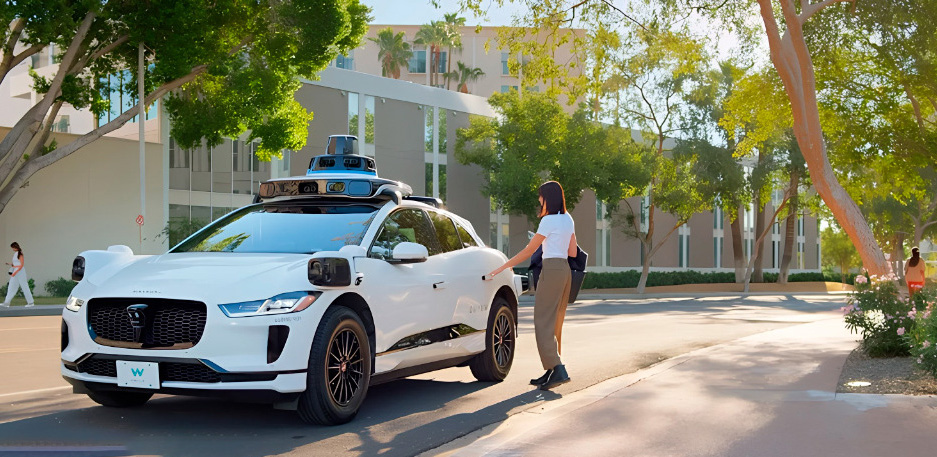
In the EU and the U.S., the rollout of autonomous systems is progressing faster, but mass approval still doesn’t exist. Germany allows level 3 automation on limited highway sections, provided the driver is ready to intervene instantly. In California, licensed robotaxi testing is allowed, but only in specific areas and under remote supervision.
Ukraine is still observing international practices. This means that until legislation changes, autonomous vehicles will remain a demonstration tool for manufacturers rather than an everyday mode of transport.
When will autonomy become a reality for Kyiv?
A realistic forecast — not before 2035. Certification standards, insurance models, adapted road infrastructure, 5G/6G networks, and centralized mapping are all required. Without these conditions, mass driverless travel is impossible.
However, technologies will gradually be integrated into regular vehicles. By 2030, according to Deloitte, 60–70% of cars are expected to have partial autonomy features, improving safety and reducing accidents.
Why RentDrive car rental remains a practical choice
RentDrive builds its business on principles of transparency and technology. Each client receives a fully ready-to-drive car with complete insurance, technical support, and modern driver assistance systems.
For tourists, it’s a way to travel freely across Ukraine without relying on public transport while maintaining comfort. For corporate clients, it’s a tool for controlling mobility and expenses.
Additionally, RentDrive offers:
- flexible rates (hourly, daily, long-term);
- option to rent without a deposit (by agreement);
- regular fleet updates;
- 24/7 support and vehicle replacement if necessary.
Reality vs. Expectations
Autonomous cars are not a myth — but neither are they a reality of today. Their development still requires years of investment and regulatory reform. In Ukraine’s 2025 economy, rationality outweighs ambition.